








What Causes An Eyelid To Droop?
If you’ve recently found that one or both of your eyelids have begun to droop, look sleepy, or even block your sight, or if you’ve noticed that droopiness is getting worse with time, you may be wondering why it’s happening, if it indicates something more serious, and whether you should seek treatment.
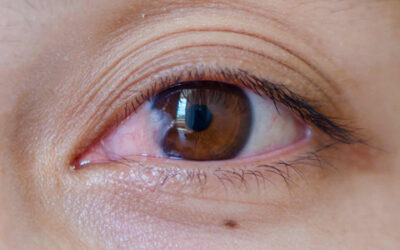
A droopy eyelid is known by optometrists as ptosis (pronounced toe-sis with a silent p), and while it can make you feel self-conscious, affect your vision, and even cause you to lift your eyelids to see better, in most cases ptosis isn’t a sign of something serious, and doesn’t often lead to serious health conditions. Here we’ll take a look at how ptosis can affect you, what causes ptosis to develop, how it’s treated, and when you should seek help from an optometrist.
It can, in some cases, require prompt medical intervention, especially if it starts suddenly and/or involves both eyes.
Disclaimer: This article is general information only and is not a substitute for professional medical advice. If you notice any change in your vision, book an appointment with your optometrist or ophthalmologist.
Key Takeaways
- Ptosis is the medical term for a drooping eyelid, affecting one eye or both.
- It can be present from birth or develop at any age.
- Common causes include ageing, eye rubbing, styes, chalazia, botox, and cataract surgery.
- Around 10% of cataract surgery patients develop temporary ptosis, and most cases resolve without treatment.
- About 1 in 7 children with ptosis also develop amblyopia (lazy eye).
- Treatment ranges from simple monitoring to eyelid (ptosis) surgery, depending on the cause.
- A sudden droopy eyelid can indicate a neurological emergency
How Can A Ptosis Affect You?
Ptosis might be present in one (unilateral) or both eyes (bilateral), and it may come and go or be a long-term concern. The most common signs and symptoms of ptosis include:
- A droopy upper eyelid that ranges from minimal (1-2 mm) to severe (more than 4 mm) and can cover the pupil entirely – the dark spot that lets light into your eyeball
- At first, the very upper field of vision may be blocked
- If the drooping eyelid covers the pupil of the eye, your vision may become completely blocked
- You may have to tip your head back and lift your chin to see more clearly or arch your eyebrows to attempt to lift your eyelids. Over time, this may cause tension headaches, eyestrain, and neck concerns
- In children, one in seven children with ptosis may also develop amblyopia, otherwise known as “lazy eye” [1]
- Eyes may feel tired and achy
- You may experience feelings of dry eyes, including increased tears
- It may be difficult to blink or close the eye
What Can Cause An Eyelid To Droop?
There could be multiple contributing factors. It’s often present from birth,[2] but it can happen at any stage in life. In many cases, it involves either a problem or weakness with the eyelid muscles, which is responsible for lifting the eyelid. Your ptosis may be caused by:
1. The normal ageing process:
As we age, the skin across our body produces less collagen, and as a result, it loses elasticity, sags, and becomes looser over time – and our eyelids are no exception. As the skin on our eyelids grows looser, it’s more likely to droop over our eyes, and this may be more so if you had hooded eyes from a young age.
Similarly, our levator muscle can stretch as we age and, as a result, cause one or both of our eyelids to fall.
2. Damage to upper eyelid:
Excessive eye rubbing or trauma can damage the muscles lifting the eyelid/s. Blunt or penetrating trauma, eyelid cuts, scarring, repeated pulling or rubbing of the eyelid, and previous eye or eyelid procedures can affect the levator muscle, its tendon-like attachment (the levator aponeurosis), or the nerves that control eyelid movement.
In some cases, the droop may appear soon after the injury. In others, it can develop gradually as the structures supporting the eyelid weaken or heal differently over time. The extent of the droop can vary depending on which part of the eyelid has been affected.
3. The Swelling in the eyelid:
Styes, chalazions, and conjunctivitis can all cause the eyelid to swell and weigh it down, causing it to droop over your eyeball.
Stye:
A stye is a small red bump, often filled with pus, that forms on the outside edge of the eyelid, at the base of the eyelashes, or inside the eyelid itself. It is usually caused by an infection within one of the eye’s glands. External styes often resolve on their own within a few days or up to one or two weeks. Internal hordeolums, which form inside the eyelid, often require oral antibiotics prescribed by a GP to resolve.
Chalazion:
A chalazion (pronounced ka-lay-zee-on) is a swollen eyelid bump sometimes called an eyelid cyst. A chalazion forms when an oil gland or tear gland in the eyelid becomes blocked. It can develop slowly over time and grow to the size of a pea, and chalazia often persist rather than resolve on their own.
Conjunctivitis:
Eyelid swelling is often caused by conjunctivitis. The most common causes of conjunctivitis are viruses, bacteria, and allergens entering the eye, but other causes may include wearing contact lenses, air pollution, fungi, parasites, or simply having something small such as an eyelash stuck in the eye. In more than 60% of cases, the body tends to cure bacterial conjunctivitis without medical intervention within one to two weeks, and allergic conjunctivitis usually gets better when you simply remove the allergen from your environment
4. Complications from botox or surgery:
Botox injections are often applied to the eyelid area to paralyse the muscles used in smiles and other facial expressions, to prevent wrinkles from forming, especially crow feet on the outer corner of the eyes, and frown lines between the eyebrows.
In around 5.4% of these cases, the botox injection can accidentally cause the levator muscle to become paralysed. Choosing an experienced nurse will help to decrease the chance of eyelid ptosis when receiving botox injections, but the good news is that the eyelid ptosis will usually settle within 3-4 weeks.
Post Cataract Surgery:
Post Cataract Surgery: Around 10% of people who undergo an operation for cataracts have temporary ptosis after their surgery, however most cases resolve on their own without any treatment.
5. Third Nerve Palsy and Aneurysm Red Flag
A third nerve palsy occurs when the oculomotor nerve, which helps control eyelid lifting, pupil size and several eye movements, is not working normally. It can cause a sudden droopy eyelid, double vision, difficulty moving the affected eye and, in some cases, an enlarged pupil.
Rarely, a third nerve palsy can be caused by pressure from a brain aneurysm. A new droopy eyelid accompanied by a dilated pupil, severe or sudden headache, double vision or abnormal eye movements needs emergency medical assessment rather than a routine optometry appointment.
In rare cases, ptosis may be caused by a more serious disease or illness such as:
- A tumour: around or behind the eyelid
- A brain tumour: that affects the muscles or reactions of the muscles around the eye[11]
- Diabetes: which can affect the nerves in the eyelid involved in controlling muscles[12]
- Horner syndrome: a rare disorder that interrupts the nerve connections between the brain and one side of the face and causes eyelid droopiness
- Myasthenia gravis: an autoimmune disease that contributes to weak muscles that tire easily, and affects the eyelid muscles
- Stroke: a stroke can cause damage to the part of the brain that controls the eyelid movements, and contribute to droopiness
How Is Eyelid Droop Assessed?
An eyelid assessment usually starts with a discussion about when the droop began, whether it affects one or both eyes, whether it changes during the day, and whether you’ve noticed other symptoms such as double vision, headache or difficulty moving the eye.
Your optometrist may then check your vision, pupil reactions, eye movements, eyelid position and how well the eyelid-lifting muscle is working. They may also look at whether excess upper eyelid skin is contributing to the droopy appearance.
If anything unusual is identified, or if the eyelid droop may be linked to another eye or health condition, your optometrist can advise on the appropriate next steps and whether further assessment or referral is needed.
Ptosis Treatment: How Is A Droopy Eyelid Treated?
Ptosis treatment depends entirely on what’s causing it. If an underlying condition such as a stye, chalazion or conjunctivitis is responsible, treating that condition usually resolves the drooping too. Mild, age-related ptosis that isn’t affecting your vision may simply be monitored over time.
When ptosis is more pronounced, affects your eyesight, or bothers you cosmetically, surgical correction — known as ptosis repair — can lift and tighten the eyelid muscle. Your optometrist can assess your eyelid, explain what’s driving your particular case, and refer you on to the right specialist if surgery is the appropriate next step.
Get Your Droopy Eyelid Assessed
Many cases of droopy eyelids aren’t serious and resolve on their own, but given a large number of ptosis causes, we recommend coming in for an assessment with our experienced optometry team if your eyelid droopiness is getting worse, or at any point, if you’re concerned. During your appointment, your optometrist will perform a comprehensive eye examination, discuss your history and any medical conditions you have, take special note of your eyelid position, and look for any eye abnormalities or problems with your nervous system or muscles.
From here, they will explain what may be causing your ptosis, and work with you to create a targeted treatment plan to manage your condition and treat it, if possible. This may be a simple intervention or may require referrals for more scans, or to an ophthalmologist or other specialist.
Book your appointment with one of our experienced eye care professionals today at your local centre.
______________________________________________________________________________________________________________________________________